Spatial Intelligence
Foundations, Architectures, Methodologies, Applications and Challenges
How AI systems construct, maintain, and manipulate representations of the physical world, and use them to perceive, reason, predict, and act. One framework, five parts and 17 chapters, from the cognitive map to world models.
- Parts
- 5
- Chapters
- 17
- Figures
- 163
- References
- 3,023
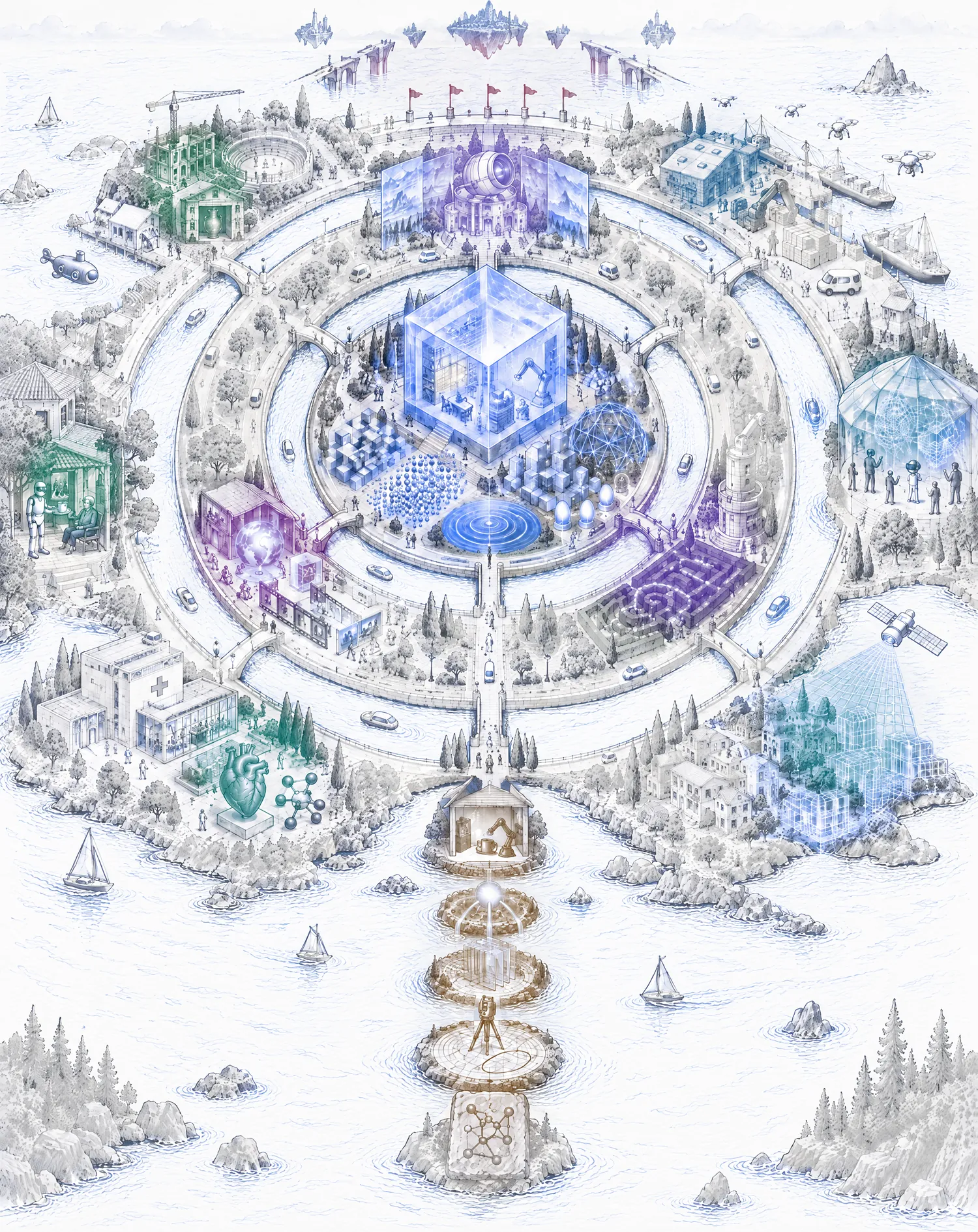
What is spatial intelligence?
The ability of an AI system to construct, maintain and manipulate spatial representations of the physical world that support perception, reasoning, prediction and embodied action.
The full definition, Section 2.2 →Five eras of representing space
Each era is defined by what it took space to be, and each left a problem for the next.
Five parts, one path from representation to action
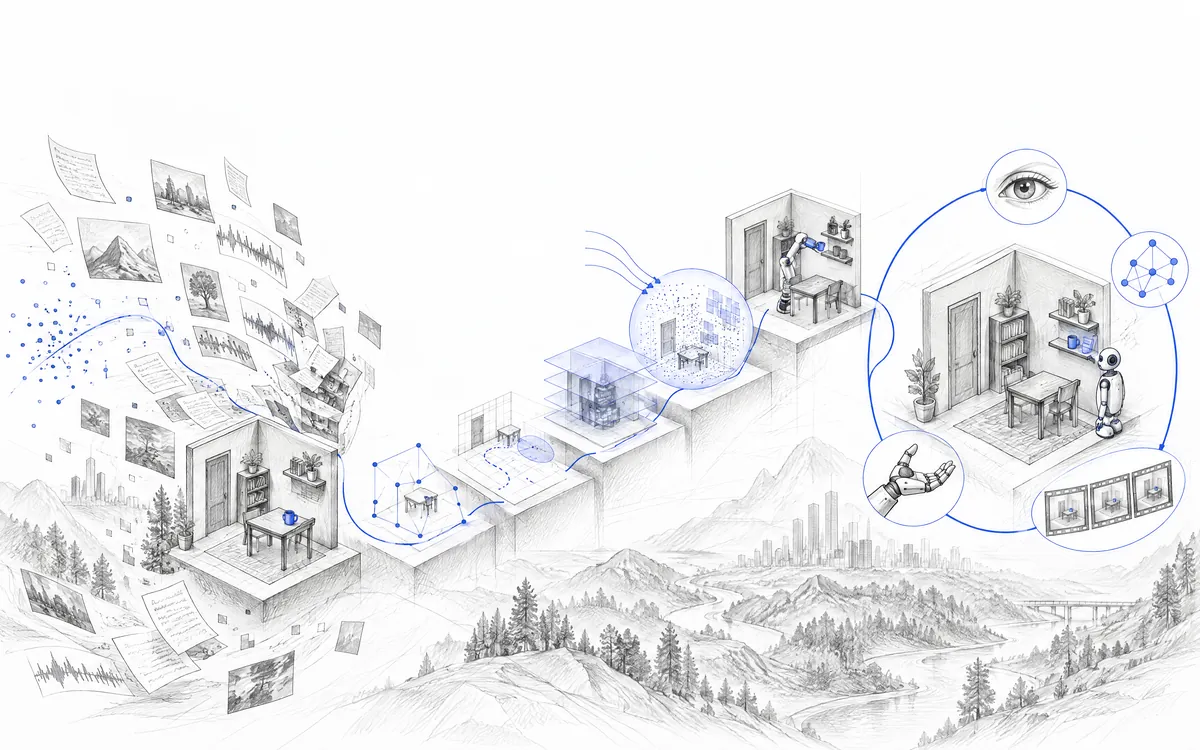
Introduction and Background
- 1Spatial Intelligence: A Rising AI Paradigm
- 2A Definition in Motion: Revisiting Spatial Intelligence
- 3Scope and Structure of This Handbook
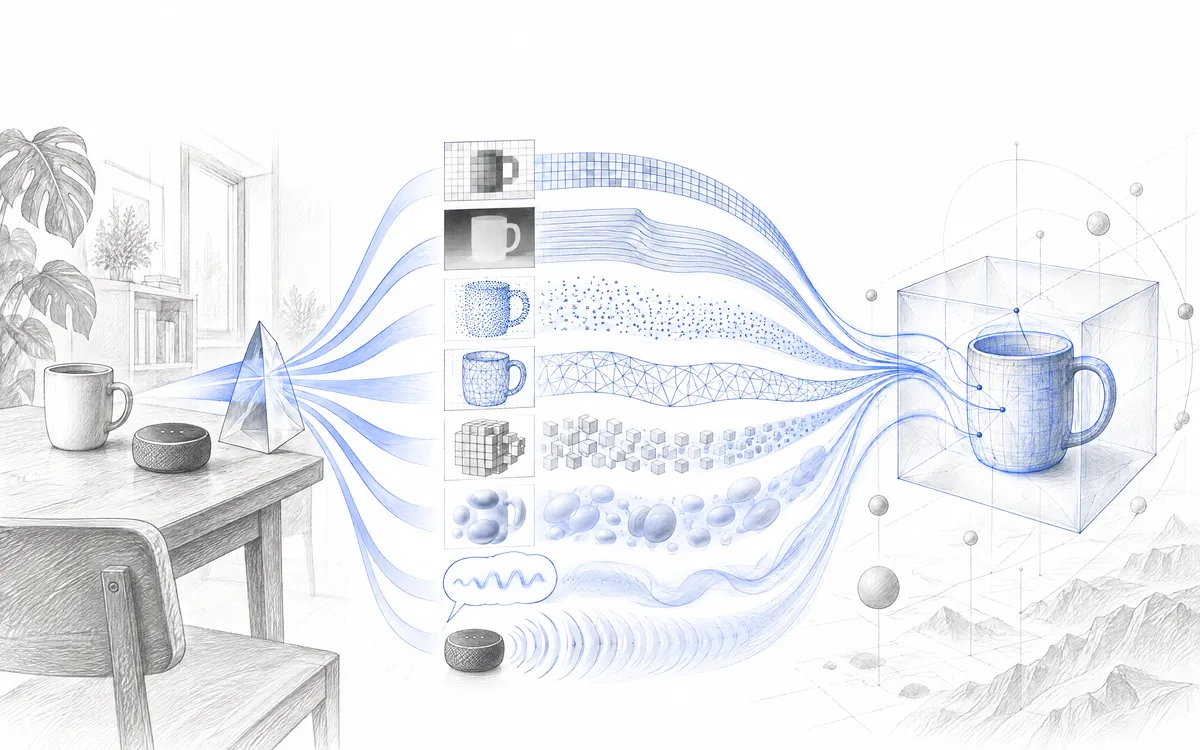
Spatial-aware Representation: Building Blocks of Space
- 4Single-Modal Spatial Representation
- 5Cross-Modal Spatial Representation
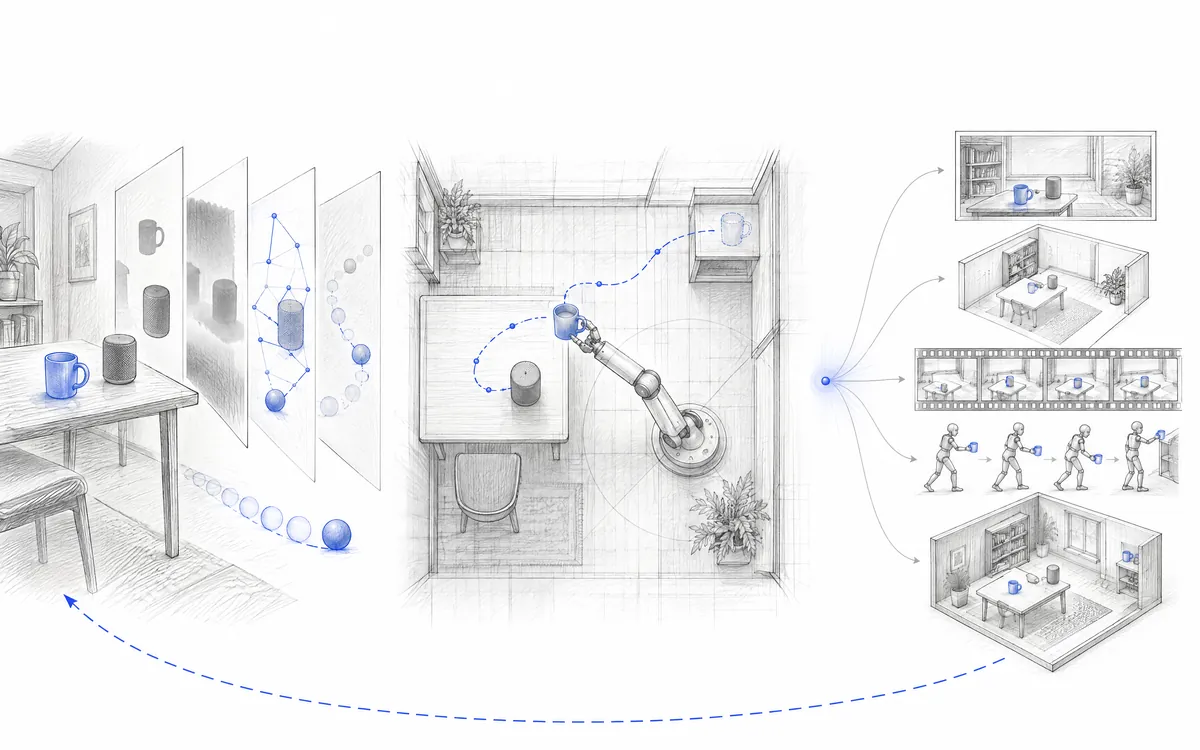
Spatial Intelligence: From Perception to Generation
- 6Spatial Perception
- 7Spatial Reasoning
- 8Spatial Reconstruction and Generation
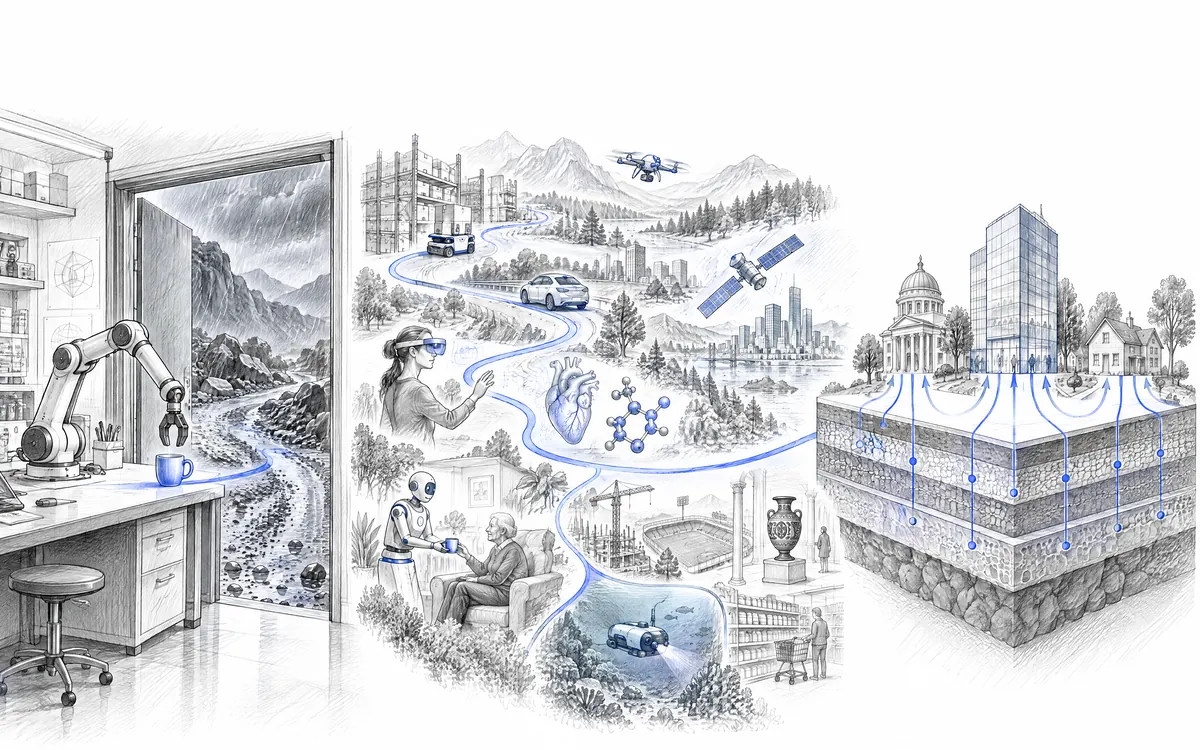
Applications
- 9Spatial Intelligence for Embodied Systems
- 10Spatial Intelligence for Virtual Realities
- 11Spatial Intelligence for Geo-spatial Systems
- 12Spatial Intelligence for Biomedicine and Natural Sciences
- 13Spatial Intelligence for Intelligent Assistance
- 14Spatial Intelligence for Others
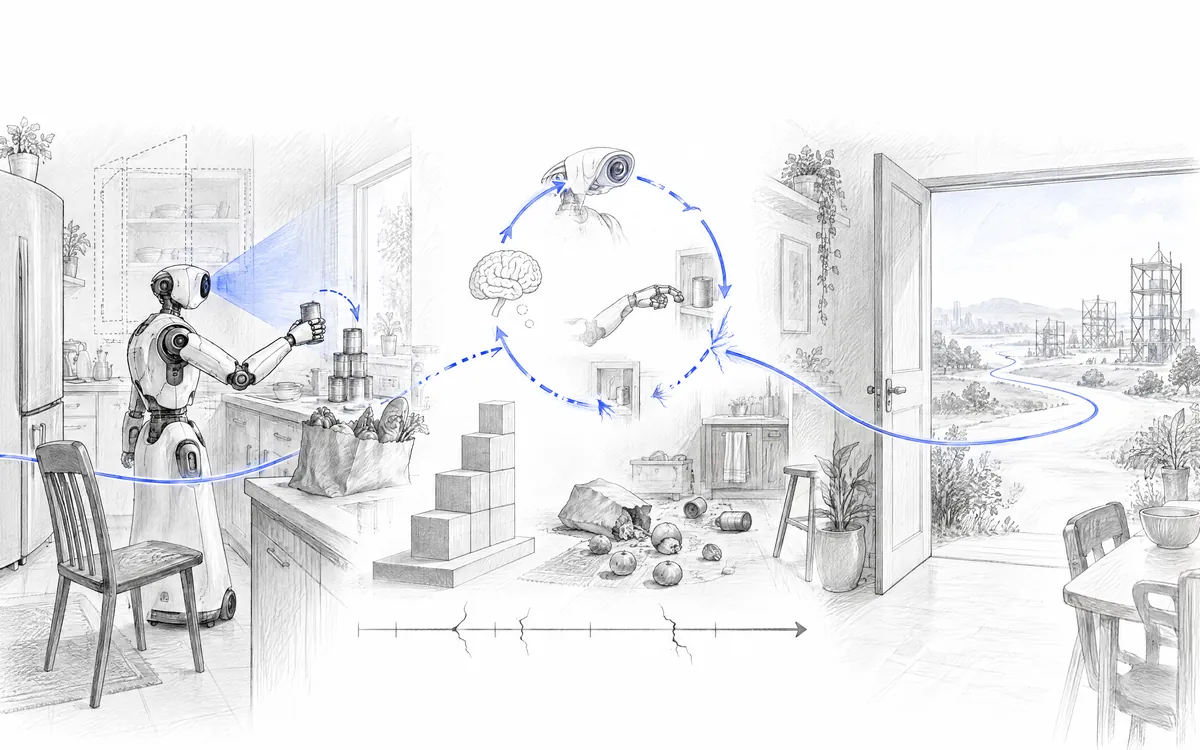
Discussions and Futures
- 15Foundations: What Spatial Intelligence Requires
- 16Research Gaps and Future Directions
- 17Conclusion
Explore the field
Everything the handbook cites, compares and builds on, organised for searching and browsing.















Citing the handbook
If the handbook is useful in your work, please cite it. Every section can also be cited on its own with Cite this section in the reader; numbers online follow the PDF, so “Section 7.2” or “Figure 6.6” mean the same in both.
@book{wu2026spatial,
  title     = {Spatial Intelligence: Foundations, Architectures, Methodologies,
               Applications and Challenges},
  author    = {Wu, Shengqiong and Zhao, Yu and Ju, Tianjie and Xu, Jundong and
               Li, Bobo and Yang, Jingkang and Tian, Shulin and Zhang, Daoan and
               Zhao, Yanguang and Ju, Xuan and Zhao, Haoyu and Zhou, Yuchen and
               Li, Xiangtai and Zheng, Zhedong and Hsu, Joy and Kong, Xin and
               Li, Ruining and Zhang, Cheng and Li, Chengzu and Duan, Jiafei and
               Zhou, Yu and Li, Kenneth and Zheng, Chuanxia and Cui, Lei and
               Wei, Furu and Liu, Ziwei and Feiner, Steven K. and Luo, Jiebo and
               Cai, Jianfei and Yan, Shuicheng and Yang, Ming-Hsuan and
               Fei, Hao},
  year      = {2026},
  url       = {https://spatial-agi.github.io}
}
Shengqiong Wu, Yu Zhao, Tianjie Ju, Jundong Xu, Bobo Li, Jingkang Yang, Shulin Tian, Daoan Zhang, Yanguang Zhao, Xuan Ju, Haoyu Zhao, Yuchen Zhou, Xiangtai Li, Zhedong Zheng, Joy Hsu, Xin Kong, Ruining Li, Cheng Zhang, Chengzu Li, Jiafei Duan, Yu (Bryan) Zhou, Kenneth Li, Chuanxia Zheng, Lei Cui, Furu Wei, Ziwei Liu, Steven K. Feiner, Jiebo Luo, Jianfei Cai, Shuicheng Yan, Ming-Hsuan Yang, and Hao Fei. Spatial Intelligence: Foundations, Architectures, Methodologies, Applications and Challenges. 2026. https://spatial-agi.github.io